Work Truck Logo
MenuMENU
SearchSEARCH

Top 5 Truck Tire Service & Maintenance Tips

Stay proactive, keep truck tires properly inflated, stay on the lookout for problems, mate your tires appropriately, and lean on tire professionals when needed.

November 8, 2022
Top 5 Truck Tire Service & Maintenance Tips

Keeping an eye on proper tire inflation is an incredibly important step for tire maintenance, but there is more fleets can do to extend the life of this essential item.

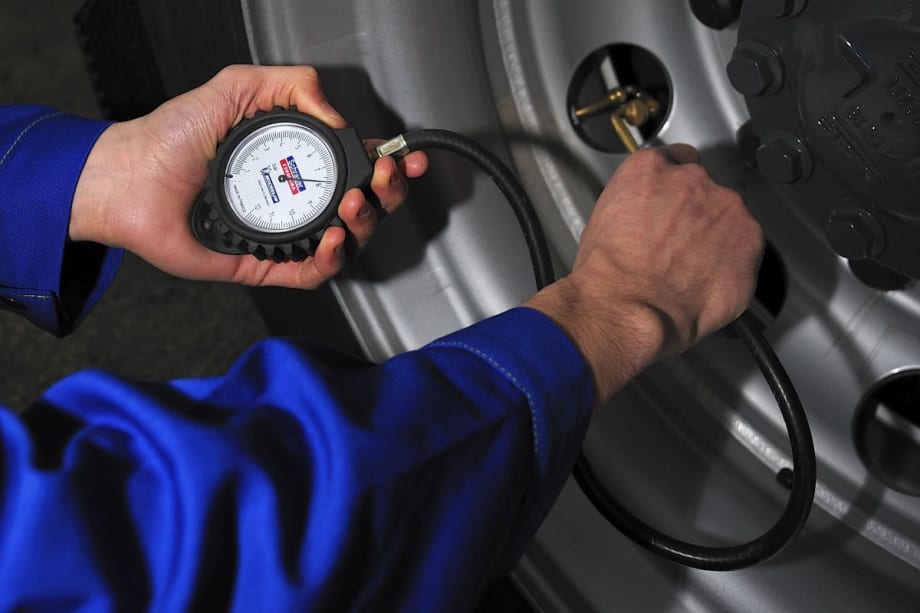
Photo: Michelin

3 min to read


Truck tires are where the rubber meets the road for work truck fleets. Making sure your tires are in proper working condition is very important, regardless of your fleet vocation. 

Work Truck shared the top five tips for servicing and maintaining your tires to help ensure your trucks stay safely and productively on the road: 

Ad Loading...

1.  Be Proactive with Truck Tire Maintenance 

Being proactive is not waiting for a problem to happen but actively participating in the maintenance process.

“Bridgestone encourages commercial truck drivers and fleet managers to be proactive in their tire management to keep trucks running efficiently and safely. Introductions of higher state highway speed limits, as well as the trend of commercial trucks running longer, faster, and with increased loads, make proper tire care imperative,” said Greg Kidd, application engineer for Bridgestone Americas Tire Operations.

Additionally, Kidd noted the importance of being proactive in maintaining additional items, such as Central Tire Inflation Systems (CTIS).

“Lack of proper CTIS care or maintenance may result in premature tire removal or possible tire failure,” he added.

Tire Safety is Key

Greg Kidd, application engineer for Bridgestone Americas Tire Operations, shared essential tips for commercial tire safety: 

  • Do not exceed a tire’s maximum recommended speed, which may be lower than the posted speed limits. 

  • Select the right tire for the job considering the proper tire size, load-carrying capacity, speed capability, and service type.

  • Set and maintain proper cold inflation pressures.

  • Inspect tires frequently for damage.

2. Keep Tires Properly Inflated

Tire inflation is not a guessing game. A truck and its tires perform their best at a specific psi.

Ad Loading...

“Proper air pressure is critical. Alignment can also be critically important, but a properly aligned piece of equipment cannot overcome poor air pressure maintenance,” said Tommy Bazzell, director of national account, truck stop & trailer OEM sales for Yokohama Tire.       

3. Stay on the Lookout for Tire Issues

Make sure drivers are looking for potential issues. 

“Visual inspections of your tires can help provide information on the health of your vehicle, from alignment to hub and brake issues. The next factor is checking air pressure regularly, which impacts the tire’s life, wear, performance, traction, fuel efficiency, and ride quality. The last is to use quality components, whether it’s lube, valves, or tires, and build a relationship with a great servicing dealer,” said Coy Jones, III, operational marketing manager, Michelin North America, Inc.

4. Mate Tires Accordingly 

Tires are not all built the same

“When changing tires, make sure tires mated in a dual application are measured and mated to within ¼ inch in diameter or ¾ inches in circumference. Also, ensure the tires mated in a dual application are inflated within four psi of each other. These two items will help distribute the load, promote a more even and longer-lasting tread wear, and enhance the handling, cornering, and traction of the tires,” said Kidd of Bridgestone Americas Tire Operations.

Ad Loading...

5. Lean on Tire Professionals

Not sure what to do? Ask the pros!

“Select the proper tires for the fleet utilizing a tire professional, keep your fleet in sound mechanical condition, including both the truck and trailer, and maintain the proper air pressure for the load. These simple steps will improve your uptime, maximize your return on investment and keep your drivers happy,” said Dave Johnston, senior manager, commercial business and product development at Toyo Tires

Curious about what’s new with light-, medium-, and heavy-duty commercial truck tires and what fleet trends are driving these tire-related trends? Check out the recent State of the Commercial Truck Tire Industry coverage. Wonder what electrification will mean for truck tires? Read more today! 

Subscribe to Our Newsletter

More Maintenance

ASE Education Foundation graphic showing a technician working under a vehicle hood with a socket wrench. Headline announces a $25 million initiative to recruit and train automotive service technicians.
Maintenanceby News/Media ReleaseJuly 9, 2026

ASE Education Foundation Receives $25 Million Federal Grant to Put a New Generation of Service Technicians to Work

The U.S. Department of Labor awarded a $25-million grant to the ASE Education Foundation to fund a four-year program to help employers hire and retain new auto, collision, and truck technicians.

Read More →
Truck driver seated in a commercial truck cab beside an over-the-air software update screen showing “Lock & Start Update” options, illustrating remote vehicle software updates that can be completed while the driver is away from the truck.
Maintenanceby News/Media ReleaseJuly 7, 2026

Mack Trucks Adds Lock & Leave OTA Software Updates

Mack Trucks’ new Over-the-Air (OTA) enhancement lets remote software updates complete unattended; simply start the update, lock the truck, and walk away. That means a driver or technician does not have to wait with the truck while the updates take place.

Read More →
Collage promoting Isuzu’s Veterans Apprenticeship Program (IVAP), featuring U.S. military personnel, a service technician, an Isuzu truck, and mechanic’s tools to highlight career pathways for veterans entering the commercial vehicle industry.
Maintenanceby News/Media ReleaseJuly 7, 2026

Isuzu Launches Veterans Apprenticeship Program to Strengthen Technician Workforce

Isuzu Commercial Truck of America has launched the Isuzu Veterans Apprenticeship Program to offer a pathway for military veterans to become trained as technicians for Isuzu dealerships.

Read More →
Ad Loading...
Several open-end wrenches are displayed beside the WrenchWay and ASE logos, illustrating a partnership focused on technician training, certification, and workforce development in the automotive and commercial vehicle repair industry.
Maintenanceby News/Media ReleaseJuly 1, 2026

ASE Acquires WrenchWay, Expanding Its Role as the Industry's Workforce Platform

The National Institute for Automotive Service Excellence (ASE) acquisition of WrenchWay strengthens ASE’s workforce development efforts and accelerates support for current and future service professionals.

Read More →
Technician wearing a high-visibility safety vest uses a handheld scanning device to inspect a commercial truck tire while viewing data on a wrist-mounted tablet, illustrating digital tire maintenance and wheel torque tracking technology.
Maintenanceby Lauren FletcherJune 29, 2026

How Connected Tire Technology Is Helping Work Truck Fleets Reduce Downtime

How are fleets using real-time tire data to reduce downtime? Goodyear's Joe Stuglis explains the shift toward predictive maintenance.

Read More →
Promotional graphic for a Utilimarc guide titled Beyond Utilization Rates: How Data-Driven Fleets Are Rethinking Vehicle Replacement, featuring a report cover with fleet vehicles, key benefits, and a call-to-action to download the guide.
SponsoredJune 26, 2026

Beyond Utilization Rates: Smarter Fleet Replacement Decisions

Vehicle replacement decisions affect every aspect of fleet performance, from operating costs to asset availability. This guide explores how fleet leaders use integrated data, benchmarking, and lifecycle analytics to determine the right fleet size and optimize replacement timing with greater confidence.

Read More →
Ad Loading...
Continental Conti Coach HA3 commercial tire with Sensor Ready technology, featuring an integrated tire sensor embedded in the tread and a close-up inset highlighting the sensor location for fleet tire monitoring.
Maintenanceby News/Media ReleaseJune 26, 2026

Continental Tires Unveils Sensor Ready Tires to Advance Digital Tire Monitoring

Continental Tires America has launched Sensor Ready tires, which feature an integrated sensor pocket and sidewall logo for identification, and offer faster installation, improved reliability, and reduced labor for fleets and retreaders.

Read More →
Graphic announcing a partnership between Linxup and Fleetio, featuring both company logos over a blue-toned background with a smartphone and blurred vehicle imagery, symbolizing connected fleet management and vehicle tracking integration.
Maintenanceby News/Media ReleaseJune 17, 2026

Linxup Expands Partnership with Fleetio to Bring Full Maintenance Management to Mid-Market Fleets

A new reseller partnership expands access to Linxup’s real-time GPS and telematics data with Fleetio’s leading fleet maintenance platform.

Read More →
Graphic promoting Michelin Connected Fleet for Class 7–8 trailer fleets, featuring a large Michelin commercial tire against a digital network background and highlighting connected tire data and fleet monitoring technology powered by NexTraq.
Maintenanceby News/Media ReleaseJune 16, 2026

Michelin Connected Fleet Expands Trailer Premium Solution

Michelin Connected Fleet’s Trailer Premium, designed for Class 7 and 8 fleet operators, detects metrics that affect tire longevity and alerts fleet managers to situations requiring tire inspection and/or preventive maintenance.

Read More →
Ad Loading...
Promotional graphic from Jasper Engines & Transmissions featuring a remanufactured Chrysler 3.6L Pentastar Gen II engine on a blue background, with company branding and product identification text.
MaintenanceJune 12, 2026

Jasper Offers Remanufactured Chrysler 3.6L Pentastar Gen II Engine

The Jasper Engine & Transmission remanufactured Chrysler 3.6L Pentastar Gen II engine is now available and is covered by a nationwide, transferable, parts and labor warranty of up to 3 Years/100,000 miles.

Read More →